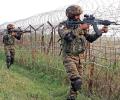
Pakistan troops have violated the ceasefire agreement for the 11th consecutive night, firing on Indian posts along the Line of Control (LoC) in Jammu and Kashmir. The firing began in Kupwara and Baramulla districts and spread to other sectors, including Poonch, Rajouri, Mendhar, Naushera, Sunderbani, and Akhnoor. The Indian Army responded promptly and proportionately. The ceasefire violation comes despite a recent phone call between the Directors General of Military Operations (DGMOs) of India and Pakistan on April 29. This marks the latest escalation of tensions between the two countries, following a terror attack in Pahalgam in April.

Pakistan criticised the laying of foundation stones for the construction of the Rattle and Kwar Hydroelectric Projects on the Chenab River in Kashmir.

It was for the first time that the high-level military talks on the lingering border row spanned two days.
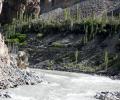
The three-day meeting between the two commissioners of PCIW completed discussions on all agenda items on Wednesday.

The government has finalised the details of a task force on Indus Water Treaty, which will be formed within one week, with the aim to stop river waters going waste in Pakistan.

For the ninth consecutive night, Indian and Pakistani troops engaged in small arms fire along the Line of Control (LoC) in Jammu and Kashmir, continuing a pattern of heightened border tensions. The skirmishes, initiated by Pakistani troops in violation of the ceasefire agreement, have led to a tense situation along the LoC and International Border (IB). The incidents come in the wake of the April 22 terror attack in Pahalgam, which claimed the lives of 26 people, mostly tourists. Civilians residing near the border have begun preparing their bunkers, anticipating potential escalation. Despite a recent hotline conversation between the Directors General of Military Operations (DGMOs) of India and Pakistan, where India cautioned Pakistan, the ceasefire violations persist.

Terrorism and insurgency in J&K had subsided when India demolished East Pakistan -- for the simple reason that Pakistan understands power. We need to follow Chanakya's dictum of Saam, Daam, Dand, Bhed for strategising against Pakistan, asserts Lieutenant General Prakash Katoch (Retd). The ground truth is that unless we are prepared to acknowledge our shortcomings, including massive intelligence failures, punish those responsible and take corrective actions, we will continue in the same vein, asserts Lieutenant General Prakash Katoch (Retd).

During the meeting, Pakistan was expected to highlight concerns about the three Indian hydro projects being built on the rivers flowing to Pakistan.

In the meeting, Doval conveyed to Wang that peace and tranquillity in border areas and respect for the Line of Actual Control are essential for return of normalcy in bilateral ties, according to the ministry of external affairs.
'What Modisaab will accomplish by tampering with the treaty is providing ammunition to ultra-nationalist right wing elements within Pakistan who see India as an existential threat.'
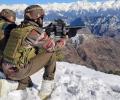
Pakistan's troops have engaged in unprovoked firing along the Line of Control (LoC) and International Border (IB) in five districts of Jammu and Kashmir, prompting retaliation from the Indian Army. This marks the eighth consecutive night of such incidents, following heightened tensions stemming from a recent terror attack in Pahalgam. Civilians residing along the LoC and IB are preparing their bunkers in anticipation of potential escalation.
'The government has to explain (to the army, air force and navy chiefs) whether they want a punitive strike, a deep punitive strike, or whether they want limited war or an all-out war, will it be a circumscribed war or will it be a shallow attack along the border.'

Pakistan has been opposing the construction of the Kishanganga hydropower project on Ganga river in Kashmir, which is called Neelum upon entering Pakistan. Pakistan has said that the diversion of the waters of the Neelum is not allowed under the 1960 Indus Waters Treaty, and that it will face a 27 per cent water deficit when the project gets completed.
The 40-year-old Indus Water Treaty between India and Pakistan has been an outstanding example of conflict resolution but scarcity of water in the basin states since the early 1990s has brought the agreement under strain and its "survival appears weak", according to a UN report.
Who were the people of ancient Indian civilizations? Has archaeological evidence confirmed the existence of common features of Vedic and Indus culture(s)? Is there an indigenous continuity of the culture in India and Pakistan or did the people come from outside the subcontinent? A two-day international conference on the Indus Valley Civilization, organized by the Loyola Marymount University in Los Angles, California, will attempt to answer some of these questions.

India has served a formal notice to Pakistan seeking a review of the Indus Water Treaty, arguing that 'fundamental and unforeseen' changes in the circumstances require a reassessment of the pact.
Fast meltdown of Himalayan glaciers threatening survival of Ganges, Indus.
The Indo-Tibetan Border Police, deployed along the country's border with China, on Tuesday announced the formation of its water wing to man lakes, rivers and hot springs in the Himalayan region. The water wing will help the border force man the Pangong Lake, whose one-third portion is in north of Ladakh in Jammu and Kashmir, Indus River and some of the hot springs and rivers in northeast. This was announced by Director General of ITBP R K Bhatia.
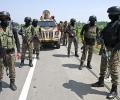
India needs to be technologically and militarily prepared to defend itself from both Pakistan and China, alerts Ramesh Menon.

According to sources, Union water resources ministry officials gave a presentation to the prime minister on the treaty and the projects involved.
"Pakistan will not accept any modifications or changes to the provisions of the Indus Waters Treaty. Our position is based on the principles enshrined in the treaty. And the treaty must be honoured in... letter and spirit," Special Assistant to Prime Minister Tariq Fatemi told Dawn News.


India to exploit to the maximum the capacity of Pak-controlled rivers -- Indus, Chenab, Jhelum as per the Indus Treat, source said.

Believed to be of archaeological importance, the object was found in the Dikshit South area of Mohenjo-daro after a downpour on August 3, the Dawn newspaper reported.
The Pakistani delegation, in its meetings with World Bank officials, insisted on early appointment of the judges and setting up the court.

The United Nations Security Council held closed-door consultations on rising tensions between India and Pakistan, with envoys calling for restraint and dialogue. The consultations, requested by Pakistan, lasted for about an hour and a half. UN Secretary-General Antonio Guterres expressed concern over the tensions, urging both countries to avoid a military confrontation. India's former Permanent Representative to the UN, Syed Akbaruddin, said that no consequential outcome could be expected from the discussion.

The Congress on Monday distanced itself from the controversial comments of some of its leaders on the Pahalgam terror attack, saying that only the recent CWC resolution and the views expressed by AICC chief Mallikarjun Kharge, Rahul Gandhi and authorised AICC office-bearers represent its position. The opposition party's assertion comes in the wake of remarks by leaders like Vijay Wadettiwar, Mani Shankar Aiyar, Shashi Tharoor, Tariq Hameed Karra and Saifuddin Soz that have triggered a row, with the BJP alleging that some from the opposition party were speaking "Pakistan's language".
Pausing the process for now, the bank would hold off from appointing the Chairman for the Court of Arbitration or the neutral expert -- appointments that had been expected on December 12 as earlier communicated by the bank.
A fresh wave of floods has forced thousands of people to flee their homes in southern Pakistan amid warnings that the situation could be further exacerbated due to continuing monsoon rains.
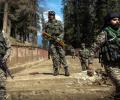
'If there is a military standoff eyeball to eyeball on the western border, the Chinese could create problems by making movements in the north, in our northeast, which could involve us tying down some forces there so that could stretch our military actions.'
Heavy monsoon showers hit the flood-hit regions of Pakistan on Sunday, worsening the flooding and impeding relief operations, compounding a humanitarian crisis that has affected over 14 million people across the country and claimed nearly 1,700 lives so far.
Pakistan has objected to India's move to fill the Nimoo-Bazgo dam in Jammu and Kashmir, claiming that it could cut off Islamabad's share of water from the Indus river.
The world's first high-altitude marathon will be held on August 16.

This Haryana village believes it has 'found' the Saraswati river of the Vedas.

Secretary of Pakistan's ministry of water resources Khawaja Shumail said: "We have neither concern nor objection if India diverts water of eastern rivers and supplies it to its people or uses it for other purposes, as the IWT allows it to do so."

'Make no mistake, depriving water deliberately to a nation of 190 million people is a repugnant idea.' 'The world community won't forgive us.'
Foreign Office spokesperson Tehmina Janjua said in a statement that the US report "Avoiding water wars in South and Central Asia," released on February 22, acknowledges that dams India is building in Jammu and Kashmir "will limit supply of water to Pakistan at crucial moments."
The Baloch and Sindhis also delivered a memorandum to the Embassy of Pakistan, outlining their concerns and demands.

Pakistan President Asif Ali Zardari finally visited the flood-hit areas in the southern province of Sindh on Thursday, two weeks after the country was hit by its worst humanitarian crisis in 80 years. Zardari visited the city of Sukkur located on the banks of the Indus River to take stock of the rescue and relief efforts. Zardari's decision to undertake a trip to France and Britain earlier, despite the country reeling under the worst floods in its history.

India is set to press for early disengagement of troops from the remaining friction points in eastern Ladakh at a fresh round of high-level military talks with China on August 14, people familiar with the matter said on Saturday.
